Why we’re moving to IR Curing for Wafers
Lately, there’s been a big push toward infrared (IR) curing. It makes sense. We’re trying to get away from solvent-based heating and those massive carbon footprints that haunt old-school factories. In a cleanroom, talking about “eco-friendly” or “lead-free” isn’t just for the marketing brochures—it’s a requirement. IR tech gets the job done by sending electromagnetic radiation straight into the substrate. No middleman.
The trick to direct heating
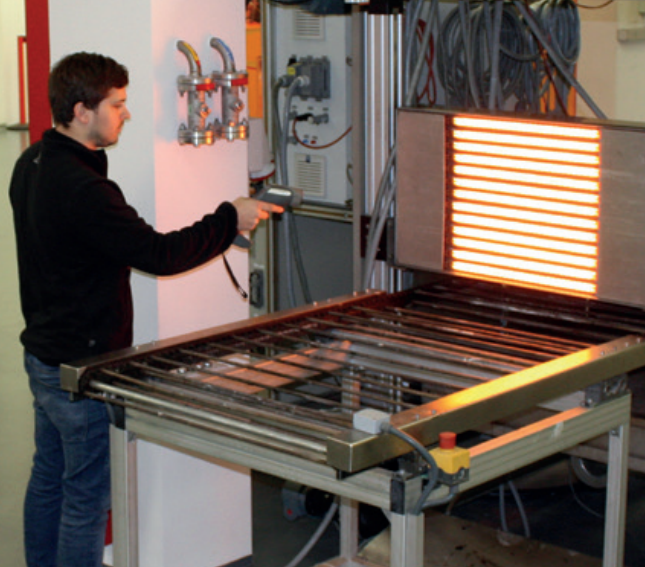
Think about a standard convection oven. It heats the air, and then the air heats the part. It’s slow. It’s wasteful. IR lamps are different. They shoot short-wave radiation that sinks right into the wafer surface. We call it direct energy transfer. Since you aren’t wasting power trying to heat up every cubic inch of the chamber, you get your heat almost instantly. It’s fast. Really fast. And that’s how you actually hit those energy-saving targets without sacrificing speed.
The balancing act: Distance and Heat
Here is where things get tricky. Most engineers I know struggle with the Safety distance between the lamp and the wafer. If you mount the lamp too close? You’ll get hot spots or accidentally fry the edges of your wafer. But if you push it too far back, your throughput tanks because the intensity drops off. It’s a bit of a tightrope walk. You have to balance the lamp’s power density with the thermal mass of the wafer. High-intensity lamps are great for speed, but they put a lot of stress on your cooling system. If your cooling can’t keep up with the ambient heat soak, your lamps are going to burn out way sooner than they should.
A cleaner way to work
The best part? IR curing is a dry process. You can ditch the chemical catalysts and those old lead-based stabilizers. No VOCs floating around. No hazardous runoff to clean up. You just wire it in, set your timers, and everything stays contained. It’s a simple, clean swap for those clunky legacy thermal systems.