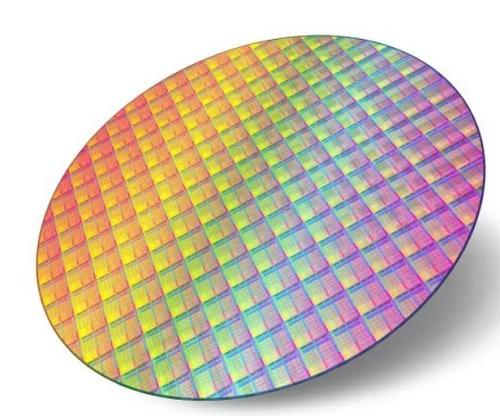
On the lithography floor, a 0.5°C hotspot across the wafer can quietly eat your overlay margin and CD control. Soft bake and hard bake don’t forgive uneven heat—never have, never will. We built a wafer surface tension measurement heater to take that variability out of the equation, and it holds temperature uniformity of ±0.1°C across the chuck. What matters under the hood It’s a cleanroom-compatible, low-particle heater design, thermally coupled tight to the wafer stage. Temperature is controlled in real time, so the setpoint stays put through the entire bake profile. Repeatability is baked into the mechanics and the control loop, which is why lot-to-lot variation drops. You get consistent solvent removal, predictable photoresist flow, and stable surface energy—exactly what the process window needs. Why it plays nice in production In Class 1–100 environments, the heater integrates without pushing particle counts. Zero particle generation protects yield and keeps scrap off the board. The uniform thermal field lets you shorten bake time without compromising photoresist performance, so throughput moves up and energy per wafer goes down. It’s built to run 24/7, so thermal drift and hotspots stop showing up as unplanned downtime on your OEE. What you need to get right Installation comes down to precise alignment to the wafer chuck and a clean, dry gas supply to protect the heater surface. The unit works with standard interfaces, but if you’re doing a retrofit, expect minor mechanical adaptation. Operating life stays strong when bake chamber exhaust and cooling match the thermal load; otherwise, control bandwidth can take a hit. Spec it properly, and the process stays in spec—day after day.