


Stop Wasting Heat in Your Vacuum Chamber
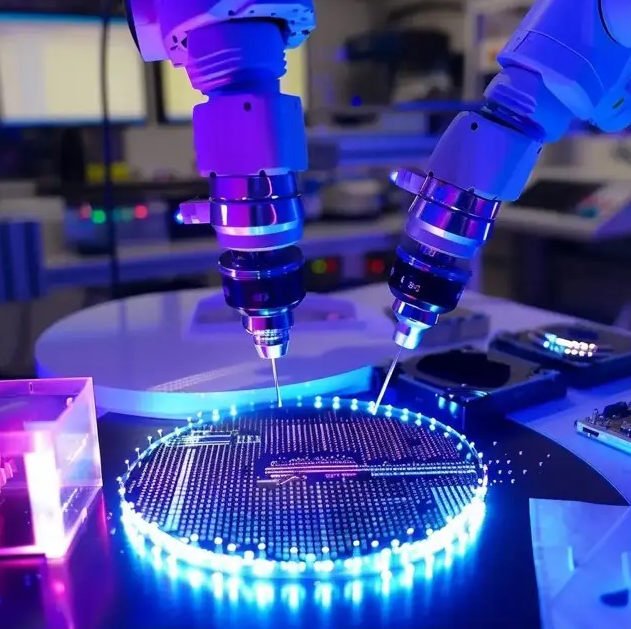
Let’s be honest: wasting energy in a vacuum chamber is just bad design. When you’re heating silicon wafers, every single watt that misses the substrate is a waste. It just ends up baking your chamber walls and making your cooling system work twice as hard for no reason. That’s why we use gold-coated reflectors. It’s about keeping the heat where it actually belongs.
Why go with gold?
Most people start with aluminum reflectors, but the problem is they let too much infrared energy slip through. We use a high-purity gold layer because it handles long-wave and mid-wave IR way better. It doesn’t just “bounce” light around; it pushes the radiant flux straight onto the wafer. Since the reflector doesn’t soak up the energy itself, almost everything hits the target.
The trick to heat density
Trying to get high energy density onto a wafer is a balancing act. You have to get the lamp wattage and the reflector shape just right. If you just throw a high-wattage lamp into a system without a precision gold reflector, you’re going to get hot spots and uneven heating. It’s a mess. Our gold-coated systems tighten that beam. You hit your target temperatures faster, and you don’t have to crank the voltage so high that you fry the filament.
The catch (because there’s always one)
Gold is the best tool for the job, but it’s not indestructible. These surfaces are picky. If your process uses corrosive gases or has a lot of outgassing, that gold layer can start to pit or degrade. You’ve got to keep the chamber clean. If a film builds up on the reflector, your efficiency tanks, and you’ll find yourself pushing more power just to keep the wafer at the same temperature. One last tip: plug these units into a stable power supply. You want to avoid voltage spikes. A steady current keeps the emission spectrum consistent, which is the only way to make sure the heat is perfectly uniform across the whole wafer.