




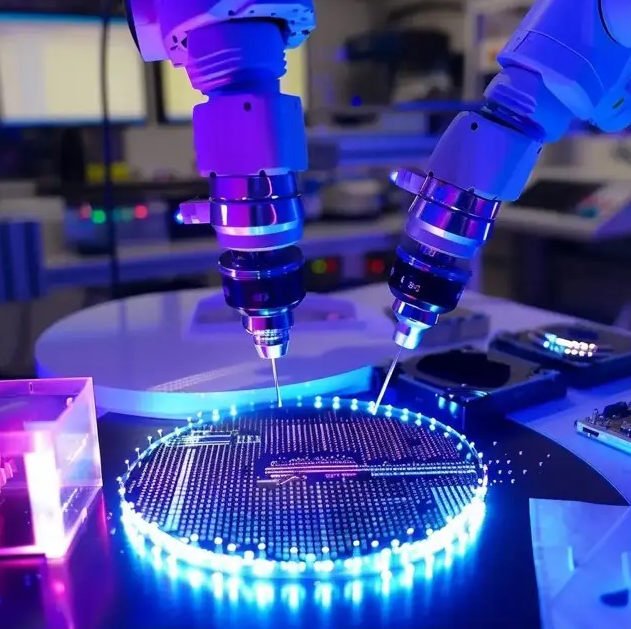
Why Gold-Coated Reflectors Actually Matter for Your IR Setup
When you’re processing semiconductor wafers, it all comes down to one thing: getting as much heat onto that surface as possible without just throwing electricity away. Most people start with standard aluminum reflectors. They’re fine, but they have a habit of soaking up too much infrared energy. It’s like trying to bounce a ball off a sponge. That’s where gold comes in. The secret is in the reflection. Aluminum is great for visible light, but it struggles with long-wave IR radiation. Gold doesn’t. It bounces that energy right back. Instead of letting your heat leak into the machine chassis, a gold coating pushes it back onto the wafer. The result? Your thermal profile looks a lot smoother, and your focus is much tighter. Getting the shape right. We don’t just slap some gold on a piece of metal. We carefully carve the parabolic curve of the aluminum base first. Once the shape is perfect, we add that precise gold layer. This ensures the heat flux hits exactly where it needs to, keeping the footprint small but the impact high. But here is the catch. When you make your heating more efficient, you’re putting more stress on your lamp housing. If you’re running high-wattage lamps with these gold reflectors, you’ve got to make sure your cooling system can keep up. If the housing gets too hot because of the reflected energy, your lamps will burn out way faster than they should. What this means for your floor. The best part is that these are basically drop-in replacements. You don’t need to rebuild your entire setup. Once you make the switch, you have two choices. You can either dial back the wattage to save on your power bill, or you can use that extra efficiency to speed up your ramp-up time. It just takes the guesswork out of the process. Every watt you pay for actually ends up doing the work on the wafer.