
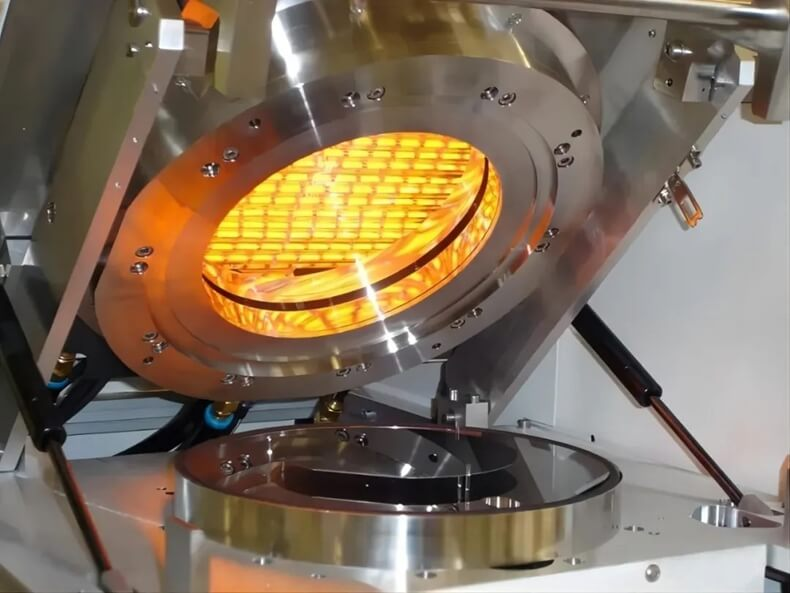
On the fab floor, the photoresist bake profile isn’t a suggestion—it’s the line between making yield and eating scrap. Glovebox work demands a heat source that hits temperature consistently without fouling the chamber. We built our glovebox infrared heater elements to live inside that constraint. Here’s what matters technically. We use a quartz-halogen, short-wave infrared emitter, chosen for fast response and tight spectral control. In practice, that means sub-second thermal settling, so the thermal budget stays inside the photoresist tolerance window. Wafer-level uniformity is held to ±0.1°C, and the heater body is compatible with Class 1–100 cleanroom operation. Output stays stable over 5,000+ hours, with less than 5% intensity drift. Zero particle generation isn’t a slogan—it’s a design requirement, verified by in-situ particle monitoring during qualification runs. Why it works in lithography support. The element holds soft bake and hard bake temperatures with repeatability that makes CD and overlay control predictable. Fast ramp-up shortens cycle time without overshoot, and localized heating cuts energy draw compared to box ovens. The payoff is fewer scrap lots, less rework, and less unplanned downtime. On advanced nodes, that consistency protects line OEE and keeps the photoresist process window from being punctured by thermal excursions. A few practical notes. The heater performs best when the glovebox chamber geometry and gas flow are matched to the radiation pattern. You need clear line-of-sight to the target, and reflective shielding has to be specified correctly to avoid hot spots. Installation is straightforward, but the interface gasket and feedthrough must be chosen for the chamber pressure and chemistry to keep seal integrity. Plan the thermal budget around the emitter’s peak wavelength so you don’t trigger photoresist sensitivity, and verify the control loop response with your existing controller to prevent oscillation.