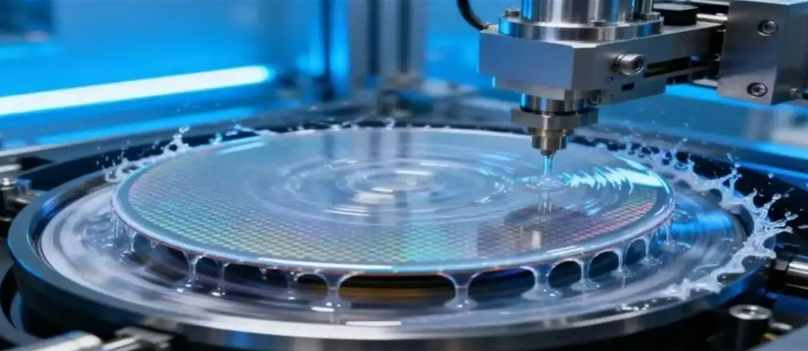
On the fab floor, a 0.5°C drift in soft bake doesn’t announce itself—it just quietly steals overlay margin and turns a full lot into scrap. In lithography, there’s no room for guesswork, and there’s no time for unplanned stops. Sustainable fab manufacturing is a real, measurable operation: watts per wafer, particle counts per cubic foot, and uptime that has to hold across 7×24. What matters technically We built the thermal systems around wafer-level uniformity of ±0.1°C across the bake plate, so soft bake and hard bake profiles repeat—cycle after cycle. Short-wave infrared heating gets the energy in fast and clean, keeping the thermal budget tight. Cleanroom Class 1–100 compatibility isn’t an add-on; it’s in the design—sealed chambers, low-outgassing materials, and no particle generation during ramp and soak. Expect uptime you can count on. MTBF lands in years, and the service life is engineered beyond 5,000 hours with minimal output degradation. Why it works where you run it You’re pushing wafers through photoresist processing and bake steps, and temperature stability is what sets CD control and yield. Precision thermal control shortens the process window, cuts scrap, and brings energy use per batch down. Reliability keeps the line moving—no aborted lots, no emergency PMs, and fewer spares tied up in inventory. The outcome is lower cost per wafer, a stable COO, and a footprint that supports ESG reporting without slowing throughput. Things to know These systems slot into existing track and lithography cells, but the thermal profile has to be matched to the substrate stack and the photoresist chemistry. Plan a short qualification run to nail down ramp rates and soak times. Utilities are straightforward, but the load needs a dedicated circuit—otherwise you risk instability during those fast temperature transitions.